The idea was raised by William John Lindley C.E. of Sharrow Lane Sheffield in May 1899. His aims were mostly social, replacing many of the worst slum areas of the city with a brand-new railway, pleasure gardens and land for development of better housing for “reasonable and just conditions of life of the working classes of all degrees.”
The Sheffield Independent carried several letters about the project including one from the proposer indicating his estimated cost to be a little over £1,000,000 and a scheme whereby the capital and interest costs of construction could be recovered.
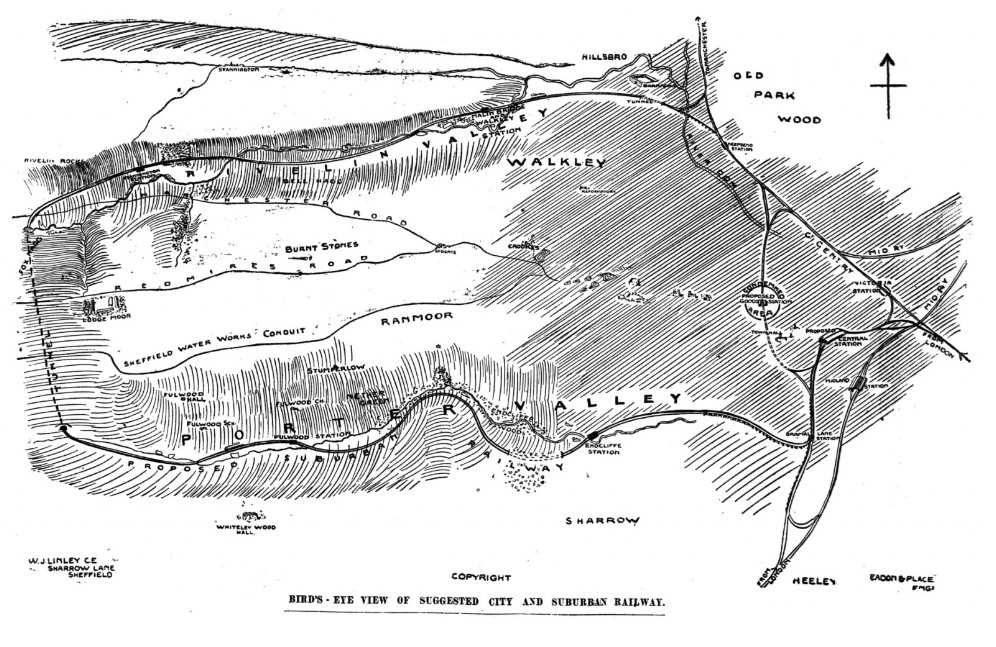
Graphic map of the proposed route
The scheme never received any official support but would have enabled those living in the city to enjoy a trip out to the Porter or Rivelin valleys and return home the same day. Below is shown the proposed route.
A rather grand new central station was to be built in Fitzallan Square in addition to the Midland and Victoria stations that were already established in Sheffield. The following illustration gives an indication of how it might have appeared:
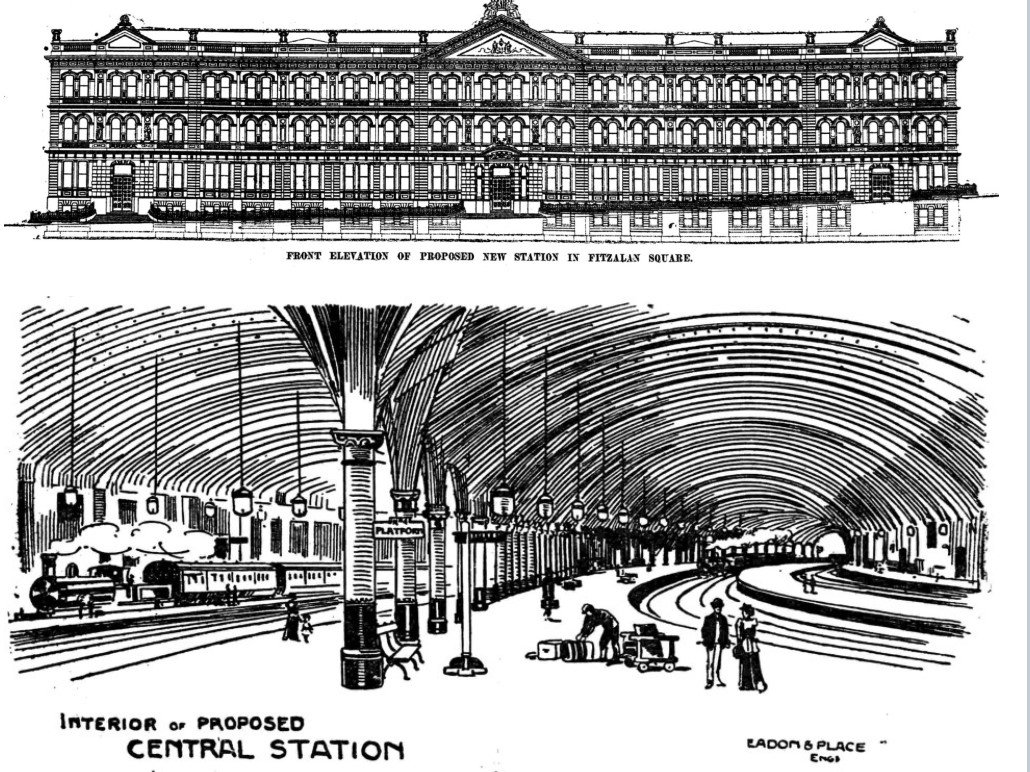
Ideas for the city centre station
The circuitous route would have involved the construction of several new stations as well as the above. From the new Central Station the line would travel to stops at Bramall Lane, Endcliffe and Fulwood before leaving the Porter Valley to pass through an underground tunnel below Redmires Road, at a point a little way past Lodge Moor Hospital to re-emerge in the Rivelin Valley where it would stop at Stannington so passengers could explore the delights of Rivelin Rocks before passing on to Walkley and Malin Bridge Station. The train would then enter another tunnel before emerging at Neepsend station. It would next call at Victoria Station at the Wicker, which would be the connection to the wider rail network, before returning to the Central Station. No doubt it would have been a pleasant day out on a fine summer’s day.
What would the effects have been on Fulwood if the proposal had been adopted? Probably very little as the tram network was, by 1899, already bringing visitors as close as Nethergreen where they could travel by foot to enjoy an afternoon boating at Forge Dam or one of the other entertainments offered by Herbert Maxfield who owned the Dam site.. Afterwards visitors might enjoy a slice of cake while waiting for the tram at the establishment next to the terminus owned by the Oates family of Fullwood Hall. The only advantage the proposed railway might have had is that the proposed Fulwood station was nearer the Porter. This might have been good for the area of the various dams but Fulwood itself was some way off and up a very steep hill and it is doubtful how many visitors would want, or have time to, explore the delights of Fulwood itself. The site of the proposed station would also have been inconvenient for Fulwood residents at the beginning of the 20th century. If it had been built and was a success though maybe Fulwood would have extended down to the Porter Valley where there would now be shops and housing developments of all times.
The idea perhaps came a little too late. By 1899 railways had certainly lost any novelty value and Fulwood developed along the existing roads rather than around any new railway station.
Alan Crutch
23rd April 2023
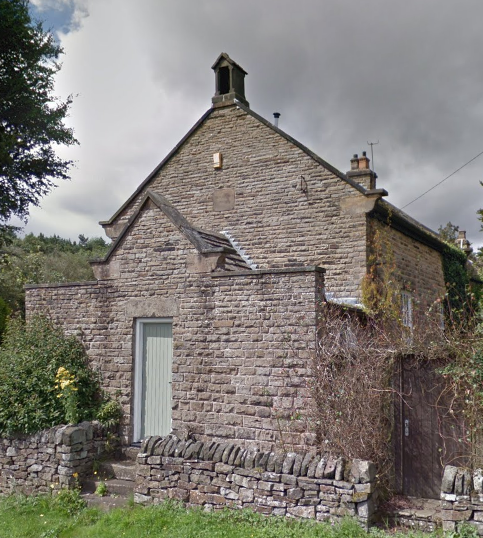 The chapel stands along Sheephill Road from old toll house. It was opened on 31st March 1864 the result of the efforts of Hugh Garside Rhodes, the minister of the Independent Chapel in Fulwood. Rhodes was born in 1790 and in the 1860s sometimes preached to a congregation of one. Herbert Trotter reported that Rhodes’ father used to preach in his absence. Here, Trotter’s recollection may not be accurate as the 1861 census records Hugh Garside Rhodes (born 1790) as an Independent Minister and head of the household, with Hugh Garside Rhodes (born 1838) as a banking clerk. So perhaps it was the younger Garside who preached in his father’s absence.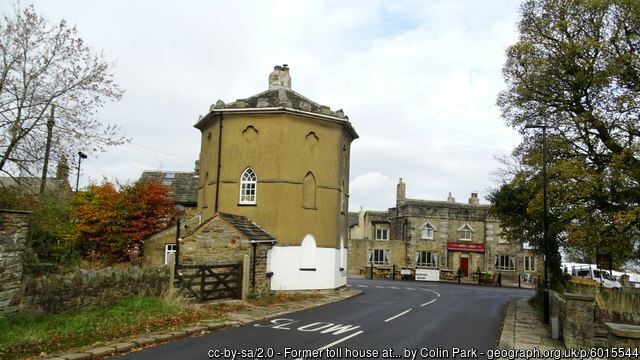
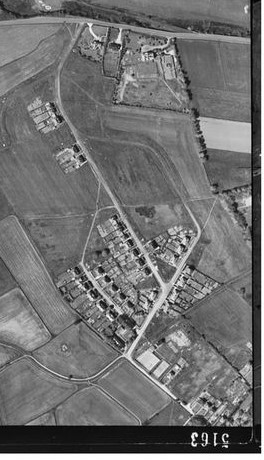
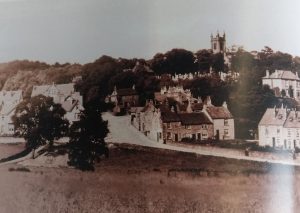 Signs of Fulwood becoming a suburb were evident by 1908. Crimicar Lane and Brookhouse Hill had new housing and Silver Birch was being developed. The photograph shows the junction in the early C20th, the foothpath that would be superceded by Brooklands Avenue is on the left and the houses, also on the left of the picture, are at the bottom of Crimicar Lane. The land for these houses had been purchased by Samuel Hancock from Henry Isaac Dixon of Stumperlowe Hall in 1905. The land in the west of Crimicar Lane drops away from Brookhouse Hill.
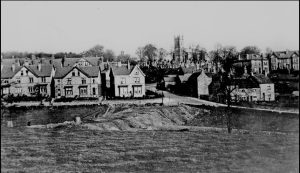 The plans to create Brooklands Avenue were in existence at least from the early years of the new century: a plan of land being sold by Henry Isaac Dixon’s executors in 1913 shows the proposed road and the ramp is clearly shown on the picture of 1912 to the right.
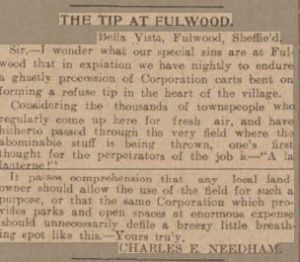 But the new residents of Fulwood valued its rural nature and the sight of rubbish being tipped did not go down well. The independent reported on the 18th March that ‘there is some protest which is growing’ over the use of refuse ‘of an objectionable kind’ being used for road building. Charles Needham, newly established in a villa opposite the church initiated the flurry of letters to the editor of the Daily Telegraph (the Idependent and the Telegraph were not averse to printing articles as direct copies of that found in their rival’s newspaper) . Needham’s letter was written soon after the tipping began and takes a swipe at Dixon as the landowner who had permitted and was being paid for allowing the tipping. T D Nichol was quick to support Needham, writing as soon as he read Needham’s letter. The rubbish being tipped was from households as the reference to ‘tined meat cans’ shows.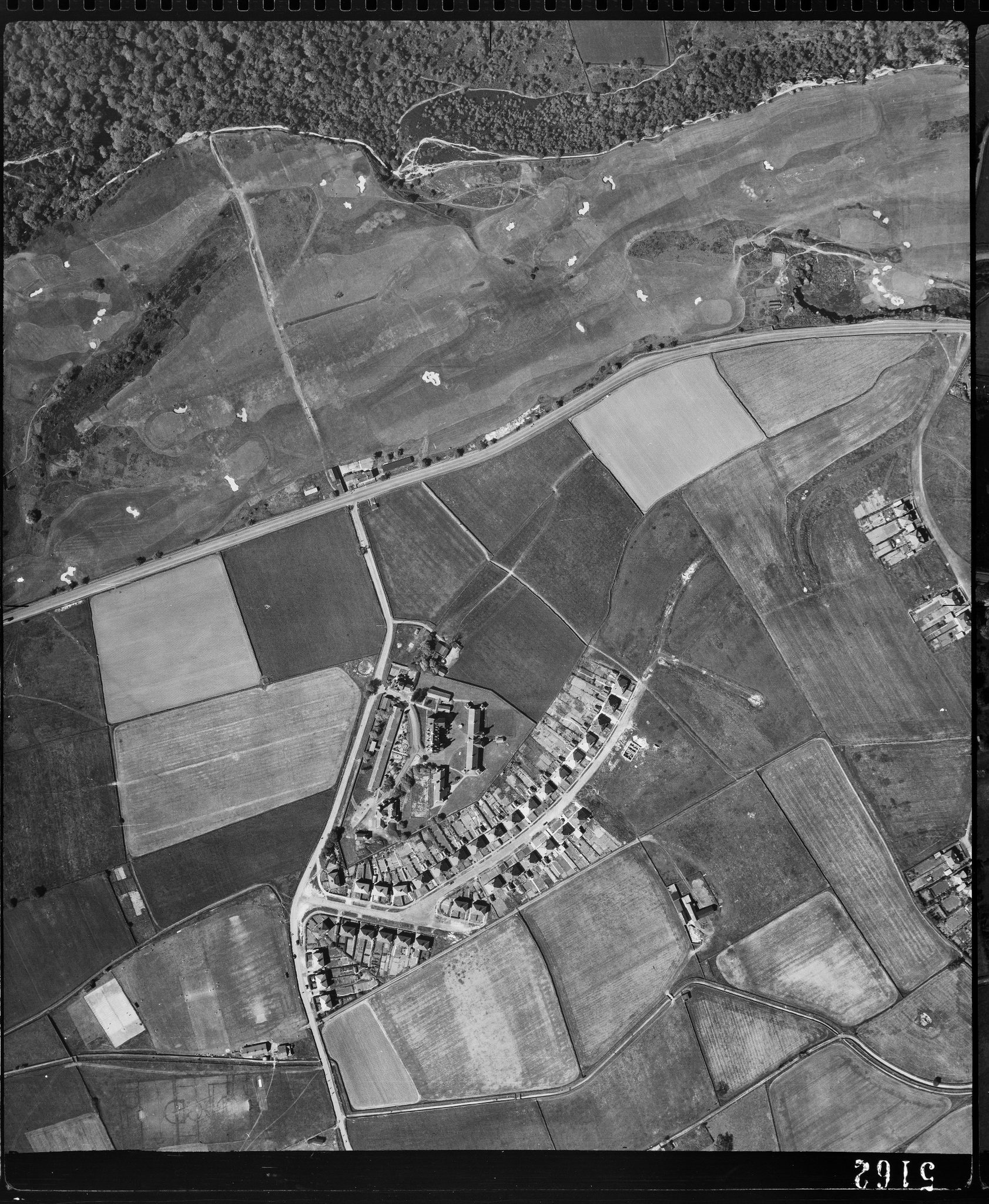
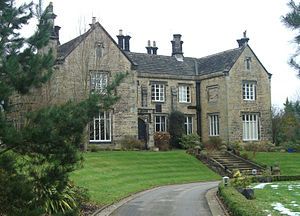 The first thing you notice is that it’s very quiet in this, one of the city’s most ancient districts. There’s muted bird song, the rustling of leaves, the whoosh of the odd squirrel leapfrogging over wrought iron gateposts, plus the purr of the occasional car. But there are very few people. Not on foot. anyway- Why should there be? There are no shops here, no community centre, no bus stops. no church – it’s halfway between St John’s. Ranmoor and Christ Church, Fulwood. Nothing. that is. to walk to. So the inhabitants either stay indoors behind the Austrian blinds, or glide out of their driveway in their indispensable cars.