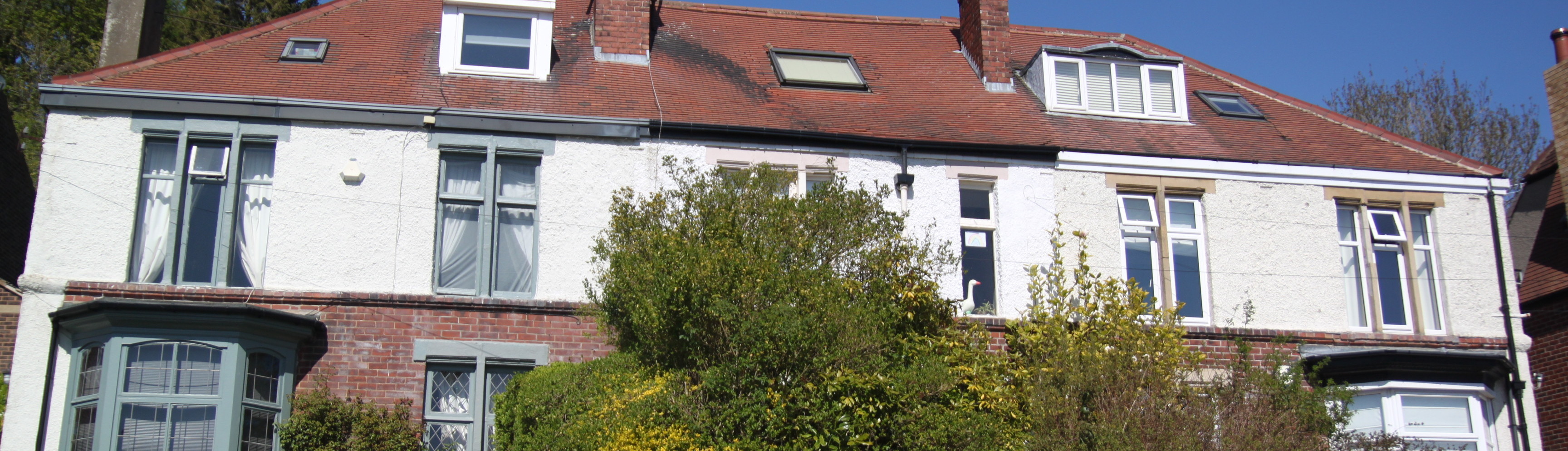
Record of FHG meeting 29/5/25

Record of FULWOOD HISTORY GROUP MEETING 29th MAY 2025

Present: J.B., A.H., M.L., C.M., D.M.

This month’s meeting took the form of a walk to explore ideas for September’s Heritage Open Days theme of architecture. This is the route we took:

  1. Old Fulwood Road: former Hammer and Pincers/smithy c. late 18th century cottage?
  2. Woofindin Road: comparison with modernist building[1] and attitudes towards ‘old’/’modern’ architecture (p. 63 Pitchforth 2024[2]), urban exploration and its contribution to heritage, former NHS building fire 23rd May
  3. Across road to Slayleigh Lane:
    • wooden supports under eaves of houses lining Fulwood Road (modillions?)
    • Newfield Court (date?) on site of former parsonage
  4. Stumperlowe Mansions (late 1930s) modernism e.g. clean lines, use of steel & brick (from local brickworks?), symmetry, verandas with S decoration, design of entrance and windows; concierge and vicarage wall/remains of garden (pp 168-9 Pitchforth 2024[3])
  5. Continuing along Slayleigh Lane up to Stumperlowe Lane: houses in very similar style to Stumperlowe Mansions scattered around this area – built at same time/same architect?
  6. Moving up Stumplerlowe Lane into area of former farmland, farms and cottages
  7. Stumperlowe Grange – view of long driveway; Broom Lawn built on its land
  8. Onto Stumperlowe Hall Road with an entrance to Stumperlowe Hall – design carved into gateposts based on castle arrow slits; differences in brickwork suggesting changes to entrance; guardstones
  9. Side of Stumperlowe Grange with stained glass and date of 1863; its outbuildings e.g. Appleby House
  10. Across road and complex of buildings which were part of Stumperlowe Hall estate: Stumper Lea, cottages – one with cruck, gateposts
  11. Noted frequency of buildings in area names referencing trees
  12. Tall chimney of Deepdene
  13. Demolition and rebuild of houses in area
  14. Pause at junction of Stumperlowe Crescent Road: view of range of architectural styles – Arts and Crafts; original distinctive style of trellis
  15. House set back in trees near crest of hill: similar style to Stumperlowe Mansions; view of Ranmoor spire somewhere here?
  16. Following Stumperlowe Hall Road round with Griffin Sick over wall in grounds of Stumperlowe View Farm
  17. Range of architectural styles visible from this junction of Stumperlowe Hall Road and Chorley Road, incl. contemporary, 2-year-old house which follows earlier styles – details of brickwork
  18. Following Stumperlowe Hall Road a little further up to catch site of Stumperlowe View Farm and gennel which follows old footpath which leads into Upper Ranmoor
  19. Back down to dip of road junctions and then follow ascent of Chorley Road with new builds
  20. Great Gilling with its stone face; Highlow; Stone Delf referencing former quarry
  21. Towards junction with Slayleigh Lane and on Slayleigh Lane itself: houses reminiscent of Metroland style with their arched doorways
  22. Down Slayleigh Lane with Fulwood Sports Club and Bowling Club Pavilions c.1911
  23. House with raised roof
  24. Meeting junction with Stumperlowe Hall Road and view of Stumperlowe Hall main entrance – note avenue of trees leading up to entrance,
  25. Down Stumperlowe Hall Road towards Fulwood Road: herringbone brickwork, former Bowling Green House at number 97
  26. Windy Corner/Arthwadson House which was showhouse for 1930s Arthwadson estate (pp 166-8 Pitchforth 2024[4])
  27. Good view of Guild Hall and Storth Cottage from this finishing point

Architectural info: terrace, cottage, villa, semi-detached, detached, Tudorbethan – beginning in the Edwardian era, continuing through the 1920s and 1930s, ‘debilitated Queen Anne style’[5], Illustrated Glossary of Architectural Terms, Glossary of Architectural terms,

Next month’s meeting 19th June at Broomhill Library tbc.

[1] For information about Sheffield’s modernist buildings: https://modernmooch.com/

[2] Pitchforth, K. (2024). From Village to Suburb. A History of Fulwood between 1880 and 1940. Arc Publishing

[3] ibid

[4] ibid

[5] Page 21, Edwards, A. 1981. The Design of Suburbia. Pembridge Press
Record of FHG meeting 17/5/25

Record of FULWOOD HISTORY GROUP MEETING 17th April 2025 

Present: D.A., J.B., M.G., M.L., C.M., D.M., K.P. 

This month’s meeting took the form of a dry run for JB’s forthcoming ‘walking talk’ –  

‘A pie and a pint with the residents of Ranmoor Market Place 1880-1919′ as part of the Scissors, Paper, Stone community project.  

We explored the length of Fulwood Road from the Bull’s Head to the Ranmoor Inn. This included: 

  • The gennel running on the west side of the Bull’s Head 
  • The Bull’s Head  
  • Marr Terrace 
  • The shops either side of Deakin’s Walk 
  • Ranmoor Terrace 
  • Ranmoor Inn 


Next month’s meeting 15th May at Broomhill Library 

Record of FHG Meeting 27/3/25

Record of FULWOOD HISTORY GROUP MEETING 27th March 2025

Present: D.A., J.B., A.C., M.L., C.M., J.P., K.P.

Discussion included:

  1. A walk C.M. had undertaken with G. Hague around the loop of the Clarendon Road in the area formerly known as the Machon House/Fulwood Estate which was developed over the 1920s-30s (see pages 128-132 of KP’s From Village to Suburb: A History of Fulwood between 1880 and 1940); varied designs of houses remarked upon
  2. James Hayton Stainton, reporter, writer, local historian and artist whose book Past Chapters in Sheffield History was published in 1918
  3. Cabin on Canterbury Crescent: originally a shed for tram drivers after tram extended to Canterbury Crescent in 1921, later a sweetshop/newsagent; is it listed? Should it be?
  4. ML’s involvement with archaeology and forthcoming event – Redmires POW Camp: Excavating History
  5. Edward Carpenter and his connection to Freeman College and Orwell’s comments
  6. Local gardeners theme from last month’s meeting:
  • Stocks family of horticulturalists who were gardeners to Henry Dixon of Stumperlowe Hall; buried in Fulwood churchyard
  • Link between private/jobbing gardeners and growth of suburban housing with its gardens and acceptability/prestige associated with well-tended lawns and beds (similar to prestige attached to having a domestic servant); previously, gardeners would have been attached to substantial villas and mansions
  1. Forthcoming 80th anniversary of VE Day: DA recording his mother’s memories; could be a wider project after this
  2. AC’s communication with J. Hancock via the FHG website in response to his article
  3. KP suggestion of FHG book collaboration: Aspects of Sheffield?
  4. Role of firms in controlling their workers e.g. through sport, developing reliance on the firm, temperance, church, social events, arts in order to avoid political unrest and comply with middle class values – see Reid, C. (1976). Middle Class Values and Working Class Culture in Nineteenth Century Sheffield – The Pursuit of Respectability.
  5. Report shared by ML relating to Roman and Medieval archaeology in the area around School Green Lane; written by R.D.Y. Perrett, the report dates from 1960; the material would be a good candidate for further investigation in the form of a walk in the months ahead; linked to ley-lines and thoughts about these     
  6. The wall running along Oakbrook Road
  7. Lower Chorley Road – the location of picture on page 65 of KP’s book cited above.
  8. CM’s query about Chorley Road entrance to Fulwood churchyard – stonework, bay and large gateposts suggest it was wider and more significant in the past, perhaps for carriages to pull in; led to discussion of the graveyard and how it was extended in the 1880s with its retaining wall and also DA’s childhood recollections of seeing graves being dug and of vaults. 1903
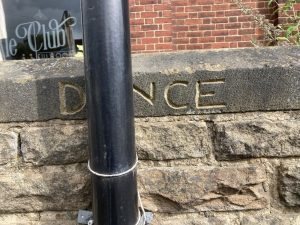
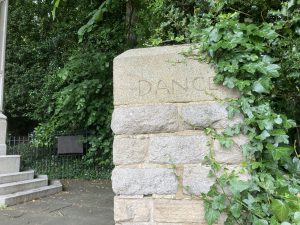
  9. Carvings/inscriptions on walls such as DANCE at two sites in Fulwood, (appeared after the 1990s?), and RAIN at Black Swan Walk in city centre       


Next meeting at Ranmoor Market/Ranmoor Inn 17th April

Record of FHG Meeting 20/2/25

Record of FULWOOD HISTORY GROUP MEETING 20th February 2025

Present: D.A., J.B., A.C., M.G., M.L., C.M., J.P., K.P.

  1. MG asked for suggestions, thoughts etc. re forthcoming Wills Workshop for the Scissors, Paper, Stone community history project; included discussion of organisation of session, gathering and using qualitative/quantitative information, processes of historical research, ethics of using historical documents


  1. Linked to Scissors, Paper, Stone, KP shared findings of research into Fulwood’s Chorley Street & Ranmoor’s Marr Terrace – comparisons of residents’ occupations, builders, land owners etc.


  1. Discussion of relationships between employers and domestic staff, (linked to wills above), which broadened into discussion of social class


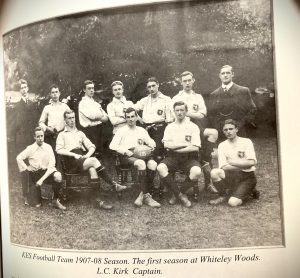
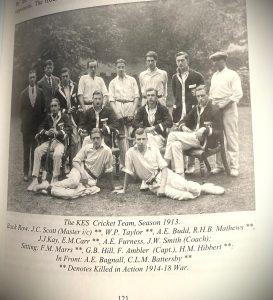
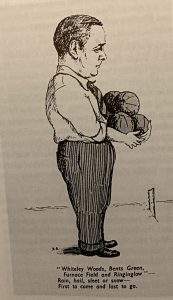
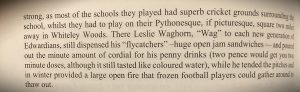
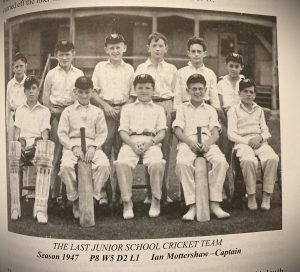
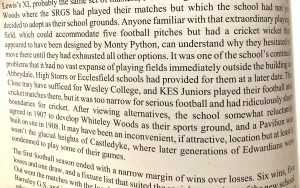
  1. JB shared print by local artist of King Edward VII sportsground at Whiteley Woods aka ‘Waggy’s Field’; the images below are from John Cornwell’s 2005 book King Ted’s A Biography of King Edward VII School Sheffield 1905-2005


  1. CM asked about the roller near Whiteley Green used as a step: see pages 53-4 of Porter Valley Landscape History and Archaeology; Final Report. April 2004


  1. KP shared information about the Stocks family of gardeners and horticulturalists


  1. JB shared information about the National Centre for English Cultural Tradition (NATCECT) – its archives are held at Sheffield University Library and are accessible to the public via appointment


  1. Next meeting March 20th at Broomhill Library


Record of FHG Meeting 16/1/25

Record of FULWOOD HISTORY GROUP MEETING 16th January 2025

Present: D.A., J.B., A.C., G.C., A.H., M.G., M.L., C.M., D.M., J.P., K.P.

Our first meeting of 2025 took place upstairs and included:

  1. Welcome & introductions to two new members who joined us this evening


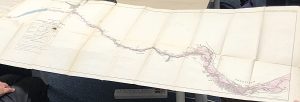
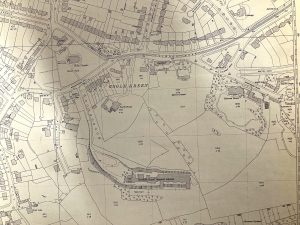
  1. AC: discussed maps and plans relating to forthcoming group visit to Fullwood Hall grounds to investigate the reason for a local belief that there was once a ‘tunnel’ between Bennet Grange and Fullwood Hall; investigation of Fullwood Hall field to be arranged for later this month (AC)


  1. DA shared copies of a colleague’s photos and press clippings relating to his family who lived in Fulwood in the 20th century; these included:
  • Percy Lawson & Edith Hancock c.1930
  • Golf Cottage at top of Crimicar Lane
  • Ocean View Guesthouse
  • Fullwood Show early 1940s


  1. Maps/documents/discussion relating to development of housing on School Green Lane


  1. Group split into discussions around various topics including:
  • Scissors, Paper, Stone project
  • Whitham Road and its development/links to Crookes Rd and Fulwood Rd
  • Fulwood Spa
  • Local streams, brooks and underground waterways and their impact on Fulwood’s suburban landscape – land slippage etc.


  1. JB & AC’s visit to Sheffield City Archives earlier in week which included a look at:
  • Plimsoll Letters Patent
  • various items from the Fairbank Collection


  1. KP will follow up re transfer of Fulwood Church archive to Sheffield City Archives. DM/JB to follow up re passing Fulwood Society documents to Sheffield City Archives after AC has completed cataloguing them


  1. Next meeting February20th at Broomhill Library


Record of FHG Meeting 19/12/24

Record of FULWOOD HISTORY GROUP MEETING 19th December 2024

Present: J.B., A.C., M.L., C.M., D.M., J.P., K.P.

 Our final meeting of 2024 included discussion of:

  1. FHG’s social media and agreement to continue with website
  2. Developing links with other local groups, how they’re organised and comparison with FHG
  3. Whiteley Green area including Whiteley Woods Hall, Stanley Royle and the ‘stone-roller re-used as a gate-stoop…likely used during the Victorian Period for agricultural purposes, such as clod-crushing, compressing soils prior to sowing, and smoothing grasslands’ Pp.43-4 Porter Valley Landscape History Final Report. Ardron Unified Landscape Assessments. April 2004. https://www.fopv.org.uk/shop?Category=Reports
  4. Maps of the area dating to 1960s which the National Library of Scotland has added to their database recently
  5. Sheffield City Archives’ recent acquisitions: A Volume of Maps of the Township of Upper Hallam, Wm. Fairbank II, 1795 and Plans, Valuation and Descriptions of Houses, Warehouses and Workshops situate in the Township of Ecclesall Bierlow’, 1842
  6. The Crookesmoor Racecourse and how it passed through the Broomhill Library site
  7. D. M. shared several items he’d brought:
    1. Tradespeople in Sheffield, a directory of 1789; this sparked discussion of terms such as ‘anvilling’, hammering and smiths
    2. Walks in the Neighbourhood of Sheffield. Book published by Leader in 1830
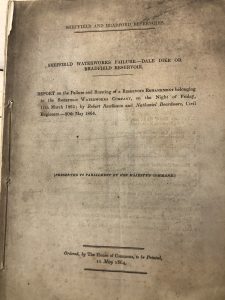
    3. Report of the Sheffield Waterworks Failure Dale Dike or Bradfield Reservoir, May 1864; this included a record of the enquiry along with maps and diagrams

  1. Next meeting January 19th (tbc) at Broomhill Library
  2. Proposed visit to Sheffield City Archive in January – tbc


Record of FHG Meeting 21/11/24

Record of FULWOOD HISTORY GROUP MEETING 21st November 2024

Present: D.A., J.B., A.C., M.G., M.L., D.M., K.P., J.P.

  1. This was the first meeting to take place at Broomhill Library since the early summer and we began with a look back at events etc. over the last few months including:
  • MG’s recent talk for the Ranmoor Society: Who Built St John’s Church?
  • FHG stall at Fulwood shops which took place the previous Saturday 16th
  • Recent publication of KP’s book From Village to Suburb: A history of Fulwood between 1880 and 1940
  1. We studied a set of BT maps of the area DM had brought dating from the 1950s/late 1960s:

  1. There was discussion of the conduit, and its small stone ‘stiles’ which could have supported the waterpipes; here’s a link to Ranmoor Society notes on the conduit and Hidden Sheffield Walks may also have information
  2. We talked about ethical issues associated with historical research
  3. General discussion included:
  • Comparisons between the trades of bricklaying and stonemasonry, from past and present perspectives
  • A look at DM’s book Wall-to-Wall History: The Story of Roystone Grange. R. Hodges (1991)
  • Styles of Sheffield church architecture
  • Sheffield’s connection with the Titantic
  • Scissors, Paper, Stone project
  • Wills as historical sources
  1. Next meeting December 19th at Broomhill Library


Record of FHG meeting 21/10/2

Record of FULWOOD HISTORY GROUP MEETING 21st October 2024

Present: J.B., A.C., D.M., C.M., K.P.

Ringinglow Ramble Part II

October’s meeting took the form of fieldwork around the Ringinglow area, building on our first Ringinglow walk in June. Our main focus was the mines and quarries of the area. Throughout our walk, DM referred us to the report From Cairns to Craters: Conservation Heritage Assessment of Burbage (Bevan, B. 2006. Moors for the Future) which contains information relating to features we looked at. See also Friends of the Porter Valley’s publication Mining and Quarrying in the Porter Valley – Delving into the Past (Peter Kennett, 2006) which provides details of most of the features we looked at.

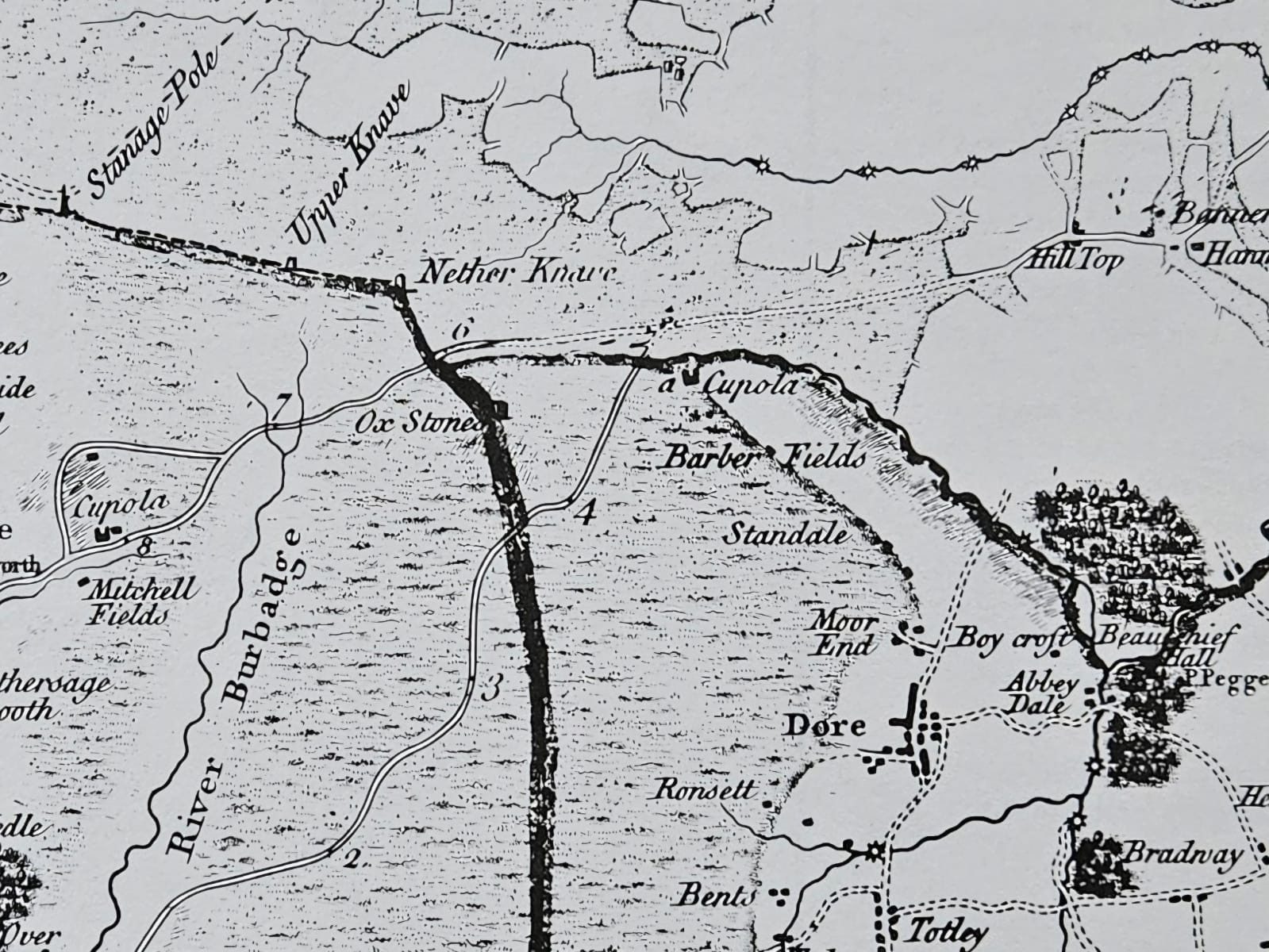
  1. We met at the layby opposite the Norfolk Arms where we began by looking at AC’s copy of Burdett’s 1791 Map of Derbyshire
  2. We headed west towards Sheephill Road, passing the site of the old Weigh House and weigh bridge – see notes from June’s Ringinglow Ramble
  3. We took a short diversion over the stile on Sheephill Road and into Barberfield and the Limb Valley to revisit the site of former mines and remains of spoil heaps (see Bevan, 2006). We discussed the alignment of the Roman Road between Brough and Templeborough, how it may well have run across this area and recent archaeological work on this – a focus for a future walk.
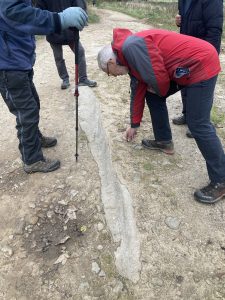
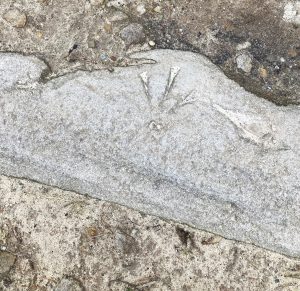
  4. After returning to Sheephill Road, we crossed over to the Houndkirk Road which leads to Stanage Pole. A couple of hundred metres along the track, (what3words) there are a number of embedded stones which appear to have a range of marks cut into them, one of which is a benchmark-type symbol. It was suggested that this could be connected with the military, who were active in this area during WWII.
  5. After following the boundary of Lady Canning’s Plantation round to the northwest, we crossed Ringinglow Road and followed the track leading north to Brown Edge Quarries. Immediately to right of the footpath, we passed the sites of bell pits which were obscured by the heather and bracken. We heard about scars in the land left by peat workings and the remains of Kelly’s House, all of which lie to the west side of the footpath. For information on Kelly’s House, see AC’s December ’23 post on this website: Ringinglow People: Henry Kelly
  6. Heading up to Brown Edge, we passed the site of a WWII bomb crater.
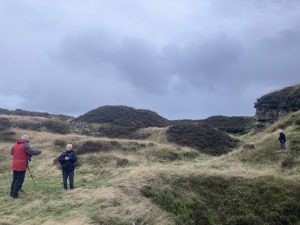
  7. We then dropped down over the edge and walked in a roughly westerly direction towards Brown Edge Quarries. On the way, AC pointed out possible boundary stones marking the former Derbyshire/Yorkshire border. See Alan’s Substack piece ‘Searching for Knaves’ to find out more.
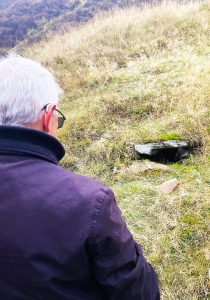
  8. We reached the Brown Edge quarry complex, ‘the most extensive in the [Porter Valley]’ (page 6, Kennett, 2006). It dates from at least 1715 and was still in use in the early twentieth century when Henry Hancock was the owner. The different types of stone extracted were suitable for various aspects of building such as walls, roof tiles, flagstones and paving stones. AC discovered what may have been a quarrymen’s shelter in the rock as well as an intriguing hole which seemed to have been built into the turf.
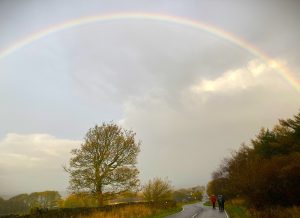
  9. A rainbow led our walk back to the layby along Ringinglow Road
  10. Next meeting November 21st at Broomhill Library


Record of FHG meeting 19/9/24

Record of FULWOOD HISTORY GROUP MEETING 19th September 2024

Present: D.A., J.B., A.C., M.G., M.L., S.L., D.M., C.M., K.P., J.P.

September’s meeting took place at Fulwood Church where we looked through the church’s archive. This included documents, photos, publications dating from the 19th century to recent times.

Takeaways from the evening:

  • Surprise at the range and extent of the material which gave an insight not only into the church, but also the history of Fulwood as a whole – and so the importance of preserving this archive (it’s to be deposited in Sheffield Archives)
  • The materials gave an insight into local attitudes, concerns and priorities e.g. the vicar’s report of 1880 and from 1919 there were descriptions of strikes at the end of the war
  • General consensus that the archive contains fascinating material and it would be good to look at it again in more detail.

Documents of note included:

  • The church accounts which indicated the connection which existed between Fulwood Church and Ranmoor St. John’s, in spite of tensions existing between the two:
    • Both vicars in the 1890s were Freemasons and on good terms
    • In the 1890s many donations to Fulwood were made from those who rented pew sittings at Ranmoor e.g. James Dixon and Frederick Thorpe Mappin
    • Both churches have windows donated by Freemasons containing Masonic symbols
    • Despite the different church traditions between them, they both seemed to have been supported by the same people to a significant extent
  • The recipe book of 1935 which contained not only interesting recipes but also two essays which define very clearly the evangelical nature of Fulwood worship
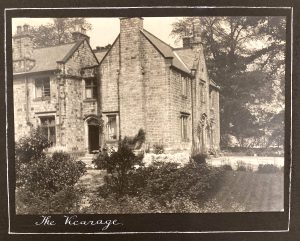
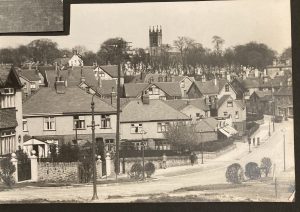
  • The photo albums which contained a number of interesting images: e.g. picture of the vicarage (where Newfield Court apartments stand), view down Brooklands Avenue towards Brookhouse Hill which predates the Co-op/photos of remembered schoolteachers
  • The record of the church’s missionary work in the 1960s/70s
  • The national (church) school log book
  • 1946 record of the contents Fulwood Road’s Guildhall when these were being donated to the church
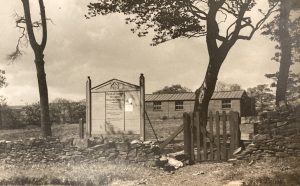
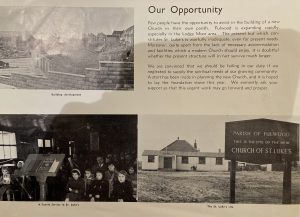
  • Documents relating to the 20th century development of St Luke’s on Blackbrook Road e.g. with use of a hut from Redmires Camp, the need for permanent premises as the suburb grew
  • Information relating to chapel at Ringinglow

Next meeting tbc


Record of FHG meeting 15/8/24

Record of FULWOOD HISTORY GROUP MEETING 15th August 2024

Present: D.A., J.B., A.C., M.L., K.P.

August’s meeting was to take the form of a walk-through of the Heritage Open Days tour but due to the wet and chilly weather, it took place under cover at the Rising Sun.

We produced a plan for this year’s guided walk – Sporting Fulwood (14th September):

  1. Old Fulwood Road:
    1. AC historical background
    2. 4/Blacksmith’s Arms/Hammer & Pincers – bowling green?, location for sporting competitions – pigeon shooting and venue for Hallamshire Hunt annual dinner in April 1863
    3. Before construction of ‘new’ section of Fulwood Road – field behind pub used for sports
    4. 1854 ‘capital cricket club’
    5. 1860 Hallam FC
    6. Willow Football Club 1886
    7. Porter Valley sports at Forge Dam, Wire Mill Dam, Jacob’s Ladder: boating – e.g. 1963 rescue Neville Haigh & Dick Hill (DM), model boats (F. Soc newsletters), swimming. skating (see 1938 film footage Yorks. Film Archive) & Sheffield Independent 5th February 1912 .  skiing (Yorks Film Archive footage from 1938 & F. Soc newsletters from 1970s/80s and C.M. recollections)
    8. Health Authority Sports facilities, tennis courts, old hut
  1. Move onto Fulwood Road, near to Guild Hall for view across road of site of former sports fields:
    1. Works grounds: Joseph Rogers (cricket ground), Cornish Works, Dixons 1920s, DA’s recollection re great grandmother’s brothers playing cricket at Round Stubbin – could have been within current churchyard? DM’s aunt – hockey
    2. Transport provided by firms
    3. Motivation for this – avoid Communism, drink and preparation for war
    4. FC&SSCC: Fulwood Church & Sunday School Cricket Club
    5. Key roles of church and pubs in supporting participation in sports
    6. Brooklands Avenue tennis club
  1. Cross road to verge at bottom of Stumperlowe Hall Road to walk between two former sports grounds and note former Bowling Green House

Google Maps 2024

  1. Turn left into Slayleigh Lane and to Fulwood Sports Club
  2. Walk up to Hallam Grange Lawn Tennis Club: ML
  3. Review – incl. social/political aspects:
  4. Changes over time: reflecting changes in demographic/population as Fulwood moved from rural community into suburban – inclusivity/exclusivity
  5. Handouts? Maps? Laminated images to show/share?
  6. Next meeting 19th September: meet at Broomhill Library for debrief and plan ahead – walks, meetings, projects and events