Fireside Travels: from Massachusetts to Nether Green via Barker’s Pool

January is a good month for fireside travelers. Written around 1864, Fireside Travels is a collection of essays by the American writer James Lowell in which he shares his experiences of his hometown of Cambridge, Massachusetts and his travels around Italy.

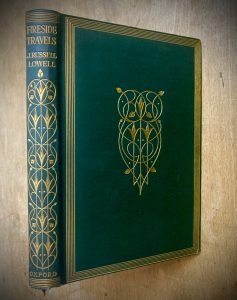
A 1909 green and gilt edition of Fireside Travels currently sits on a stand in our bookshop. Its cover caught my eye with its elegant Art Nouveu design of golden intertwining stems set into dark green cloth. The book’s title was intriguing, but something of even greater interest was to be found on the inside back cover, (the ‘rear pastedown’ in booksellers’ language). Tucked into the bottom left corner is a tiny magenta label with G. C. SNAITH, 124 BARKER’S POOL, SHEFFIELD printed in silver. This sparked my curiosity – I wanted to find out about this Sheffield bookshop from over a century ago.
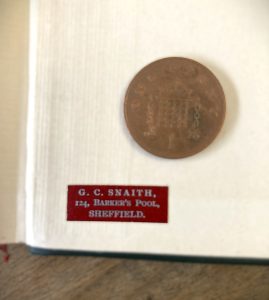
       

George Collinson Snaith was a bookseller in Barker’s Pool, specifically, “Pool Square”, in the late Victorian and early Edwardian periods. The Picture Sheffield image below shows a row of shops in Pool Square, all of which were demolished in the 1920s to make way for the City Hall.
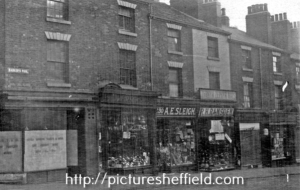
www.picturesheffield.com: image Reference s13277

The left edge of the picture shows the corner with Holly Street and Division Street, probably more or less the location of today’s Women of Steel sculpture. Below the BARKER’S POOL street sign is Robert Cross’ butchers shop, its blinds lowered. Moving right, at number 132, are the Misses J. A. and M.E. Peirson, florists, while A. E. Sleigh Ltd., surgical instrument makers, can be seen at number 130. Next is hatter Robert Ramsden. A hoarding for “ZEPHYR ZEPHYR HATS” sits above Ramsden’s sign. In 1899, Ramsden was advertising his “ZEPHYR ZEPHYR” silk hats and “fine felt hats” in local newspapers with slogans such as “Light as a Feather”, “Black as a Sloe” and “Latest London Styles”. At number 126 are the Misses Mayor, needlework dealers, and then there’s Snaith’s bookshop just visible to the very right: there seem to be books and papers displayed against the windowpanes.

The little label had led from our bookshop in Endcliffe to an Edwardian bookshop in the town centre. But what about the owner – did he live above his premises or was his home elsewhere? It turned out that George Snaith lived out of town in Fulwood’s emerging suburbs. At the time of the 1901 and 1911 censuses, (the period in which the photograph above was most likely taken), George was married and living on Nethergreen Road.
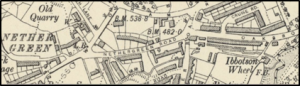
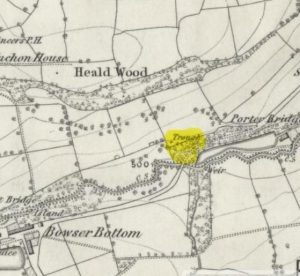
Revised: 1902 to 1903, Published: 1906  Reproduced with permission of The National Library of Scotland

From this point in George’s life, it is worth travelling back along his timeline to see what we can learn about his earlier days. Born in 1857 and the oldest of six children, George came from the Darlington area where his father William was an accountant for the railway. The famous Stockton to Darlington line was the first to use steam locomotives for passenger transport and is viewed as the beginning of our modern railway. Coincidentally, the line opened the year of William’s birth in 1825. Perhaps this gave him an affinity with the railway from an early age. Whether he felt a special connection with the S&DR or not, his white-collar profession would place him in a relatively comfortable social class. That the family employed a servant was another indicator of the Snaith’s social standing.

By the time he was 24 in 1881, George had moved down to Sheffield and was employed as stationer’s assistant, lodging at Gloucester Street in Broomhall. George’s mother Mary was born in Hatfield, near Doncaster, so perhaps this was the connection which led him to south Yorkshire.

Stationery and books have a natural connection and by 1887 George had established his bookshop in Barker’s Pool. A local newspaper advertisement from that year directed readers to Snaith’s Booksellers if they liked the sound of a new publication called “THE CONFESSIONS OF A BACHELOR; and other Sketches” by H. Grafton (“Decidedly amusing…will promote laughter wherever read”). At some point in 1909, when our copy of Fireside Travels was published, it must have made its way into Snaith’s shop and perhaps one of his apprentices, (for which he advertised vacancies), stuck that tiny label inside the back cover.

Newspaper advertisements show that Snaith’s was not only a shop to buy the latest good reads, but also a place where you could buy tickets for events. For example, in February 1904 you could catch “Little Lord Fauntleroy by Mrs Frances Hodgson Burnett” performed at The Albert Hall. In November 1910, you could pop into Snaith’s to buy a ticket to hear the pioneering folk music and dance collector Cecil Sharp give a “Morris and Country Dancing Lecture…with Twelve illustrative Dances”. This event took place at the Temperance Hall and was hosted by the Sheffield Branch of The Teachers Guild.

Although there appears to be no record of George in the 1891 census, it is on record that he married Alice Robinson in the summer of that year. Alice’s family had moved to Sheffield from Buckinghamshire. Her father Edward was a commercial traveller, selling leather goods. At the time of her marriage to George, Alice’s family were living in Sunnybank, in Broomhall. This was the period when George was lodging in Broomhall which suggests there was a local factor in their meeting.

This takes us back to Nether Green, where the couple settled. Snaith’s Booksellers is listed in the 1911 White’s Directory for Sheffield, but George died in March of the following year, aged only 55, sadly providing a sudden end to a journey which began with a bookseller’s label.

Jane Bartholomew, January 2026
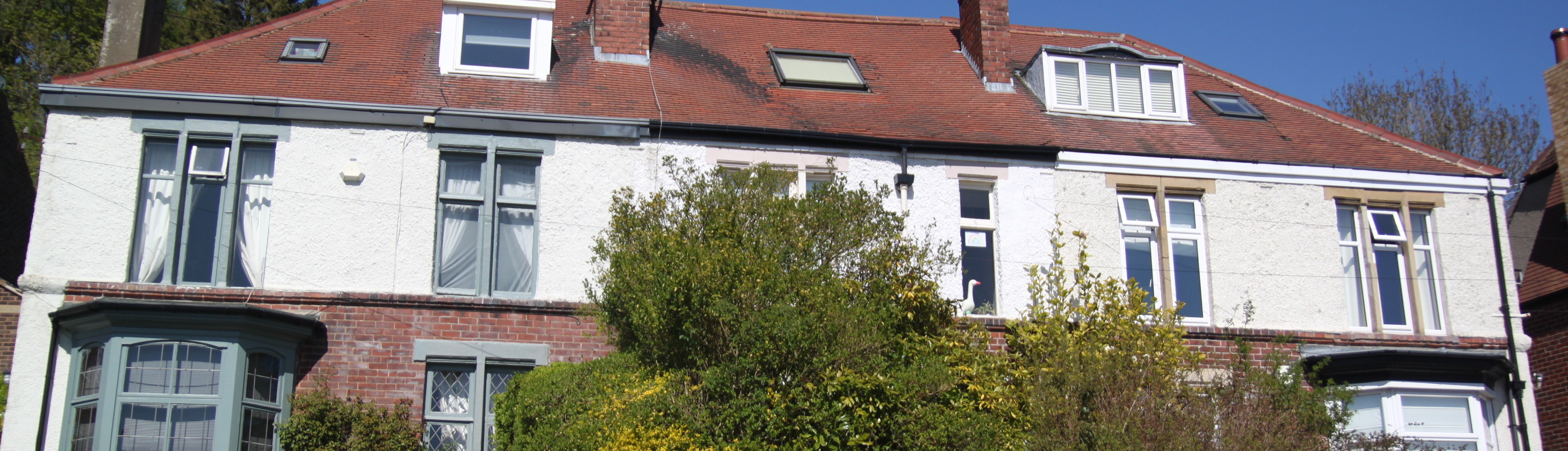
Record of FHG Meeting 18/12/25

Record of FULWOOD HISTORY GROUP MEETING 18th December 2025

Present:  D.A., N.B., A.C., M.L., D.M., K.P., J.P.

Business Matters:

  1. The anniversary payment for the FHG website will be due soon
  2. Keith suggested that the Group should hold its next meeting at a restaurant: this was agreed

Items:

  1. Matthew reported that he had been digging in the garden of Broomhill Library
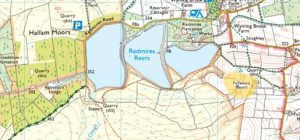
  2. We welcomed Neil Birchenall to the Group. He gave a short history of Stanage Lodge which he owns and lives in along with his family. The house has needed substantial renovations. It is completely off-grid, the house is surrounded by land belonging to the Duke of Rutland.There was a brief discussion about the location of Fulwood Booth. The conclusion was as is shown on the OS map (Fulwood Booth to SE of eastern-most reservoir):

OS map Redmires Reservoirs with Fulwood Booth to their SE

History:

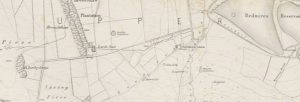
1854: Lumley Lodge is to the right of the map. Reproduced with the permission of the National Library of Scotland https://maps.nls.uk/
  1. 1700s known as Lumley Farm, later Lumley Lodge
  2. Until 1977 the Lodge was owned by a member of the Wilson family (Snuff mill fame)
  3. 1977 sold. Was locaton of Redmires Shoooting Club. Financial problems meant owner’s bank foreclosed the mortgage
  4. 1977 – 2023 owned by another family. At end only Jane remained in house
  5. Neil and family restoring the house. Caming barn & cottage(s) for rent being developed.
  6. Property is completely off grid for power, water, etc.
  7. Partnership with Rutland (duke) and Yorkshire Water that has moors for the future spend
  8. Neil showed a website: ‘property market intel’ which is a subscrition App showing who owns land. Private Owners’ details are not displayed but corporate owners are detailed.
  9. Other locations were mentioned:
    1. Fairthorne Lodge owned by Daniel Doncaster. Was for a time a holiday location for children e.g when mother had newborn
    2. Grouse & Trout was known as Whitehouse Farm

Next meeting to take place at Valencia restaurant 15.1.26


Record of FHG Meeting 20/11/25

Record of FULWOOD HISTORY GROUP MEETING 20th November 2025

Present: J.B., A.C., G.C., M.G., M.L., D.M., K.P., J.P.

Discussion included:

1) MG: Scissors, Paper, Stone provisional programme for 2026: interpreting wills, occupations recorded in documents and their significance e.g. gardeners, hierarchy of servants, implications of phrase “country girls preferred” used in newspaper advertisements for servants

2) Ranmoor society catalogue: ongoing progress with this; clarification that archives store original material while local studies library tends to keep printed materials

3) JB shared some extracts from Transactions of the Unitarian Historical Society Part I, Oct. 1937 & Part II, Oct. 1938; they give a sense of Fulwood’s remoteness pre-20th century, and of its connection with Derbyshire towns and villages rather than with the town of Sheffield

4) GC shared John Wilson’s The Songs of Joseph Mather (Sheffield, 1862). Mather (1737-1804), a file-cutter, wrote ballads which provide a social commentary of late 18th-century Sheffield; he also wrote a song called The Nether Green Lad which GC read to us; a more recent collection of Mather’s songs is called Seditious Things (Kay and Windle, 2017)


5) KP told us about developments regarding local planning permission

6) Update on Fulwood Spa investigation (AC, ML): more information and images shared; could the features have included a WWII lookout? Were they associated with ski runs?

Next meeting 18th December 2025


Record of FHG Meeting 16/10/25

Record of FULWOOD HISTORY GROUP MEETING 17th October 2025

Present: D.A., J.B., M.L., C.M., K.P., J.P.

At our first meeting since the summer and back in Broomhill Library, our discussion included:

  • Archaeological dig in Broomhill Library Garden taking place (ML)
  • University of Sheffield Landscape Architecture students’ project based on Broomhill and its library
  • Visit to Turner Museum of Glass at University of Sheffield
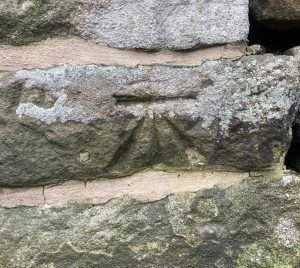
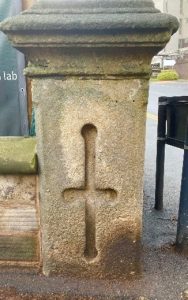
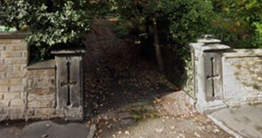
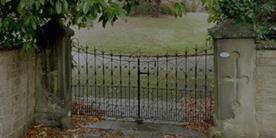
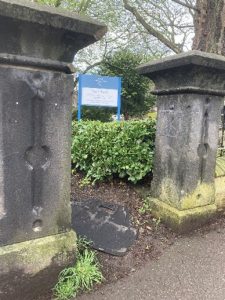
  • Cruciform design seen in stone posts in the area:
      Glossop Road, Broomfield Road, Stumperlowe Hall Road, and a variation of the design in Mount View, Glossop Road
  • Oak Brook and its lost footpath
  • Springs and structures in wooded area near Woodcliffe. D.A. shared findings of recent investigation undertaken with A.C.
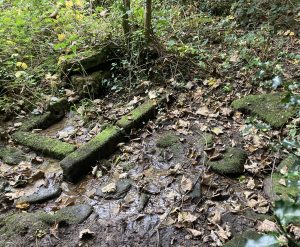
  • Trough ‘discovered’ by J.B. between Whiteley Woods & Woofindin Road
  • Based on information from Trade Directories, the relatively large proportion of gardeners living in the area in the late 19th and early 20th centuries (K.P.)
  • J.B.’s blog re Ranmoor Market available on Scissors, Paper, Stone website
  • Next meeting 20th November 2025

Record of FHG meeting 17/7/25

Record of FULWOOD HISTORY GROUP MEETING 17th July 2025

Present: D.A., J.B., G.C., M.L., C.M., D.M., K.P., J.P.

This was our second summer meeting on the top field at Forge Dam

  1. History & background of G.C.’s house on School Green Lane and how it had been developed
  2. Recent arson at Fulwood House which has caused significant damage to the building
  3. DM told us about a folder of information collected over the years by owners of former Hammer & Pincers pub on Old Fulwood Road
  4. KP led us on a walk around Brookhouse Hill and lower Chorley Road
  5. Next meeting tbc


Record of FHG meeting 19/6/25

Record of FULWOOD HISTORY GROUP MEETING 19th June 2025

Present: D.A., J.B., A.C., G.C., S.C., R.F., A.H., C.M., K.P., J.P.

We met on the top field at Forge Dam

  • History & background of land relating to Forge Dam field and lower Brookhouse Hill
    • Whitelely Lane, known as Chapel Lane, had been widened in the length fronting the chapel and graves were removed from this space – when was this?
    • A quarry had occupied space we were seated on – late 19th and early 20th centuries – the entrance had been somewhere just below Brook House
    • The Hancock family of builders had a plan for substantial area housing in this space; Hancock went bust in early 30s J.G. Graves Trust bought the land, so it was protected from development
    • See Pitchforth From Village to Suburb photo ‘Looking up Brookhouse Hill about 1920’, p.125, ‘School Green Lane and Whiteley Lane’ p149, ‘Continuous Change’, p.157
    • AC had discovered a Sale notice: MINATURE GOLF COURSE AND TENNIS COURTS at FULWOOD and WHITELEY, SHEFFIELD: which covered an area bordered by Whiteley Lane, Quiet Lane and Brookhouse Hill. It refers to ‘the WHITELEY WOOD MINATURE GOLF COURSE and 2 HARD TENNIS COURTS and small Hut’ and that it ‘forms an excellent site for a public institution, or the erection of Villa Residences’
      • There had been tennis courts in the 1930s on the raised section of the field, but they could have belonged to the houses built there – not public
      • Mini golf may have taken place on the lower area of field next to lower Brookhouse Hill (Lea Lane)
    • Was the field used for allotments during WWII?
    • There had been an orchard in the area where Muriel Hall’s bungalow was  built; MH’s bungalow has been extensively redeveloped

1850s Reproduced with the permission of the National Library of Scotland
1938/47 Reproduced with the permission of the National Library of Scotland

  • JB shared information from an enquiry sparked by a postcard from July 1908 sent by Florence Wilson nee Dixon of Stumperlowe Hall and then Tapton Hall; Florence addressed the card ‘Fulwood House’ – where her brother James was living at the time; it was sent to a what seems to have been a friend, (Ada Nicholson), who lived in Manchester; see KP’s post about Fulwood Hall on this website
  • GC shared childhood memories of Tapton Hall, particularly its water feature, (fed by the Oak Brook) and the substantial trout it contained
  • AC’s Substack piece on Brook House is available here: https://alancrutch.substack.com/p/brookhouse-brook-house
  • AC then led us on an exploration of the cluster of buildings where Brookhouse Hill meets Whiteley Lane which include Brookhouse Farm, Brook House, Brook Lea, Brook Lodge and the former coffee house (Brook Cottage?). He told us about the people who lived in this area known as ‘Brook House’, (recorded in the late 1700s ‘Brook Hause’) or ‘Brook House Green’. ‘Brook House’ did not refer to one building, as it does now, but to a whole area or hamlet. Crimicar Lane was recorded as Brook House Green in the 1850s.
  • KP’s post about 127 Brookhouse Hill explores the upper end of this road
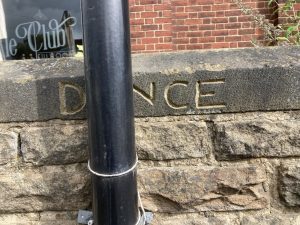
  • We walked up to the Ale Club, noting the ‘DANCE’ inscription
  • See also: https://alancrutch.substack.com/p/dry-fulwood which includes history of the Fulwood shops area.

  • Next meeting tbc

Record of FHG meeting 29/5/25

Record of FULWOOD HISTORY GROUP MEETING 29th MAY 2025

Present: J.B., A.H., M.L., C.M., D.M.

This month’s meeting took the form of a walk to explore ideas for September’s Heritage Open Days theme of architecture. This is the route we took:

  1. Old Fulwood Road: former Hammer and Pincers/smithy c. late 18th century cottage?
  2. Woofindin Road: comparison with modernist building[1] and attitudes towards ‘old’/’modern’ architecture (p. 63 Pitchforth 2024[2]), urban exploration and its contribution to heritage, former NHS building fire 23rd May
  3. Across road to Slayleigh Lane:
    • wooden supports under eaves of houses lining Fulwood Road (modillions?)
    • Newfield Court (date?) on site of former parsonage
  4. Stumperlowe Mansions (late 1930s) modernism e.g. clean lines, use of steel & brick (from local brickworks?), symmetry, verandas with S decoration, design of entrance and windows; concierge and vicarage wall/remains of garden (pp 168-9 Pitchforth 2024[3])
  5. Continuing along Slayleigh Lane up to Stumperlowe Lane: houses in very similar style to Stumperlowe Mansions scattered around this area – built at same time/same architect?
  6. Moving up Stumplerlowe Lane into area of former farmland, farms and cottages
  7. Stumperlowe Grange – view of long driveway; Broom Lawn built on its land
  8. Onto Stumperlowe Hall Road with an entrance to Stumperlowe Hall – design carved into gateposts based on castle arrow slits; differences in brickwork suggesting changes to entrance; guardstones
  9. Side of Stumperlowe Grange with stained glass and date of 1863; its outbuildings e.g. Appleby House
  10. Across road and complex of buildings which were part of Stumperlowe Hall estate: Stumper Lea, cottages – one with cruck, gateposts
  11. Noted frequency of buildings in area names referencing trees
  12. Tall chimney of Deepdene
  13. Demolition and rebuild of houses in area
  14. Pause at junction of Stumperlowe Crescent Road: view of range of architectural styles – Arts and Crafts; original distinctive style of trellis
  15. House set back in trees near crest of hill: similar style to Stumperlowe Mansions; view of Ranmoor spire somewhere here?
  16. Following Stumperlowe Hall Road round with Griffin Sick over wall in grounds of Stumperlowe View Farm
  17. Range of architectural styles visible from this junction of Stumperlowe Hall Road and Chorley Road, incl. contemporary, 2-year-old house which follows earlier styles – details of brickwork
  18. Following Stumperlowe Hall Road a little further up to catch site of Stumperlowe View Farm and gennel which follows old footpath which leads into Upper Ranmoor
  19. Back down to dip of road junctions and then follow ascent of Chorley Road with new builds
  20. Great Gilling with its stone face; Highlow; Stone Delf referencing former quarry
  21. Towards junction with Slayleigh Lane and on Slayleigh Lane itself: houses reminiscent of Metroland style with their arched doorways
  22. Down Slayleigh Lane with Fulwood Sports Club and Bowling Club Pavilions c.1911
  23. House with raised roof
  24. Meeting junction with Stumperlowe Hall Road and view of Stumperlowe Hall main entrance – note avenue of trees leading up to entrance,
  25. Down Stumperlowe Hall Road towards Fulwood Road: herringbone brickwork, former Bowling Green House at number 97
  26. Windy Corner/Arthwadson House which was showhouse for 1930s Arthwadson estate (pp 166-8 Pitchforth 2024[4])
  27. Good view of Guild Hall and Storth Cottage from this finishing point

Architectural info: terrace, cottage, villa, semi-detached, detached, Tudorbethan – beginning in the Edwardian era, continuing through the 1920s and 1930s, ‘debilitated Queen Anne style’[5], Illustrated Glossary of Architectural Terms, Glossary of Architectural terms,

Next month’s meeting 19th June at Broomhill Library tbc.

[1] For information about Sheffield’s modernist buildings: https://modernmooch.com/

[2] Pitchforth, K. (2024). From Village to Suburb. A History of Fulwood between 1880 and 1940. Arc Publishing

[3] ibid

[4] ibid

[5] Page 21, Edwards, A. 1981. The Design of Suburbia. Pembridge Press

Record of FHG meeting 17/5/25

Record of FULWOOD HISTORY GROUP MEETING 17th April 2025 

Present: D.A., J.B., M.G., M.L., C.M., D.M., K.P. 

This month’s meeting took the form of a dry run for JB’s forthcoming ‘walking talk’ –  

‘A pie and a pint with the residents of Ranmoor Market Place 1880-1919′ as part of the Scissors, Paper, Stone community project.  

We explored the length of Fulwood Road from the Bull’s Head to the Ranmoor Inn. This included: 

  • The gennel running on the west side of the Bull’s Head 
  • The Bull’s Head  
  • Marr Terrace 
  • The shops either side of Deakin’s Walk 
  • Ranmoor Terrace 
  • Ranmoor Inn 


Next month’s meeting 15th May at Broomhill Library 

Record of FHG Meeting 27/3/25

Record of FULWOOD HISTORY GROUP MEETING 27th March 2025

Present: D.A., J.B., A.C., M.L., C.M., J.P., K.P.

Discussion included:

  1. A walk C.M. had undertaken with G. Hague around the loop of the Clarendon Road in the area formerly known as the Machon House/Fulwood Estate which was developed over the 1920s-30s (see pages 128-132 of KP’s From Village to Suburb: A History of Fulwood between 1880 and 1940); varied designs of houses remarked upon
  2. James Hayton Stainton, reporter, writer, local historian and artist whose book Past Chapters in Sheffield History was published in 1918
  3. Cabin on Canterbury Crescent: originally a shed for tram drivers after tram extended to Canterbury Crescent in 1921, later a sweetshop/newsagent; is it listed? Should it be?
  4. ML’s involvement with archaeology and forthcoming event – Redmires POW Camp: Excavating History
  5. Edward Carpenter and his connection to Freeman College and Orwell’s comments
  6. Local gardeners theme from last month’s meeting:
  • Stocks family of horticulturalists who were gardeners to Henry Dixon of Stumperlowe Hall; buried in Fulwood churchyard
  • Link between private/jobbing gardeners and growth of suburban housing with its gardens and acceptability/prestige associated with well-tended lawns and beds (similar to prestige attached to having a domestic servant); previously, gardeners would have been attached to substantial villas and mansions
  1. Forthcoming 80th anniversary of VE Day: DA recording his mother’s memories; could be a wider project after this
  2. AC’s communication with J. Hancock via the FHG website in response to his article
  3. KP suggestion of FHG book collaboration: Aspects of Sheffield?
  4. Role of firms in controlling their workers e.g. through sport, developing reliance on the firm, temperance, church, social events, arts in order to avoid political unrest and comply with middle class values – see Reid, C. (1976). Middle Class Values and Working Class Culture in Nineteenth Century Sheffield – The Pursuit of Respectability.
  5. Report shared by ML relating to Roman and Medieval archaeology in the area around School Green Lane; written by R.D.Y. Perrett, the report dates from 1960; the material would be a good candidate for further investigation in the form of a walk in the months ahead; linked to ley-lines and thoughts about these     
  6. The wall running along Oakbrook Road
  7. Lower Chorley Road – the location of picture on page 65 of KP’s book cited above.
  8. CM’s query about Chorley Road entrance to Fulwood churchyard – stonework, bay and large gateposts suggest it was wider and more significant in the past, perhaps for carriages to pull in; led to discussion of the graveyard and how it was extended in the 1880s with its retaining wall and also DA’s childhood recollections of seeing graves being dug and of vaults. 1903
  9. Carvings/inscriptions on walls such as DANCE at two sites in Fulwood, (appeared after the 1990s?), and RAIN at Black Swan Walk in city centre       


Next meeting at Ranmoor Market/Ranmoor Inn 17th April