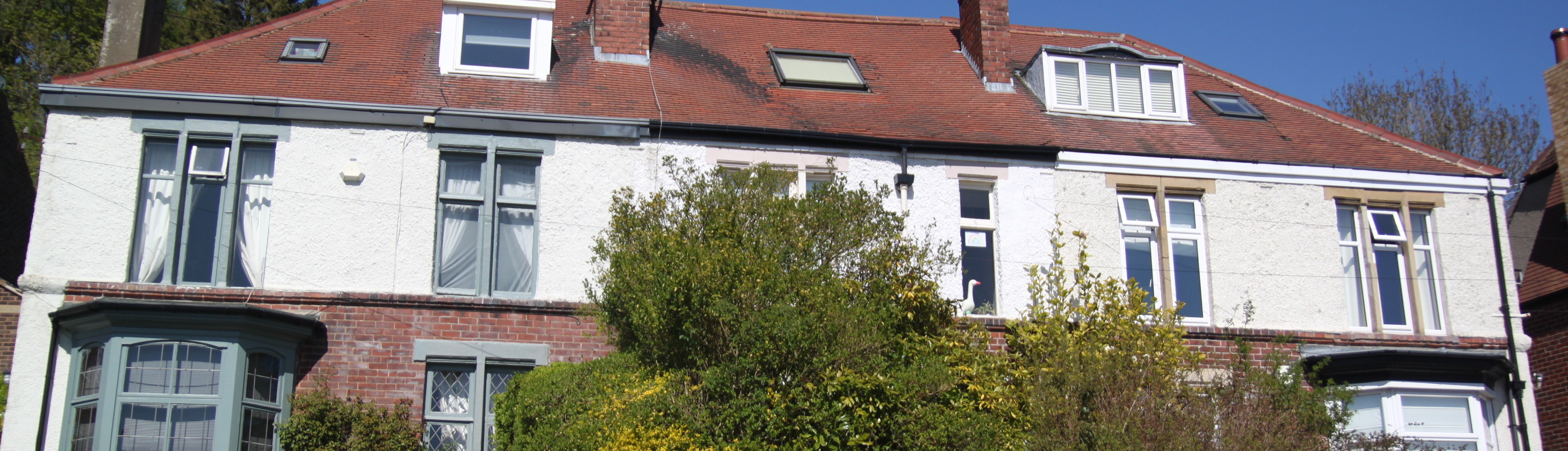
The first part of the story of Ebenzer Parker is here
Thomas’ Family
The grandson of Ebenezer (1790-1862), Thomas was born in Sheffield in 1869. His father was Alfred (1831-1895) who was Ebenezer and Mary’s third child and second son.
Alfred joined his father and elder brother, Edward, in the family firm which became known as Ebenezer Parker & Sons. His role in the company involved travel to Scandinavia and it was in Norway that Alfred met Magna Olava Duus. They married and returned to Sheffield where Thomas was born.
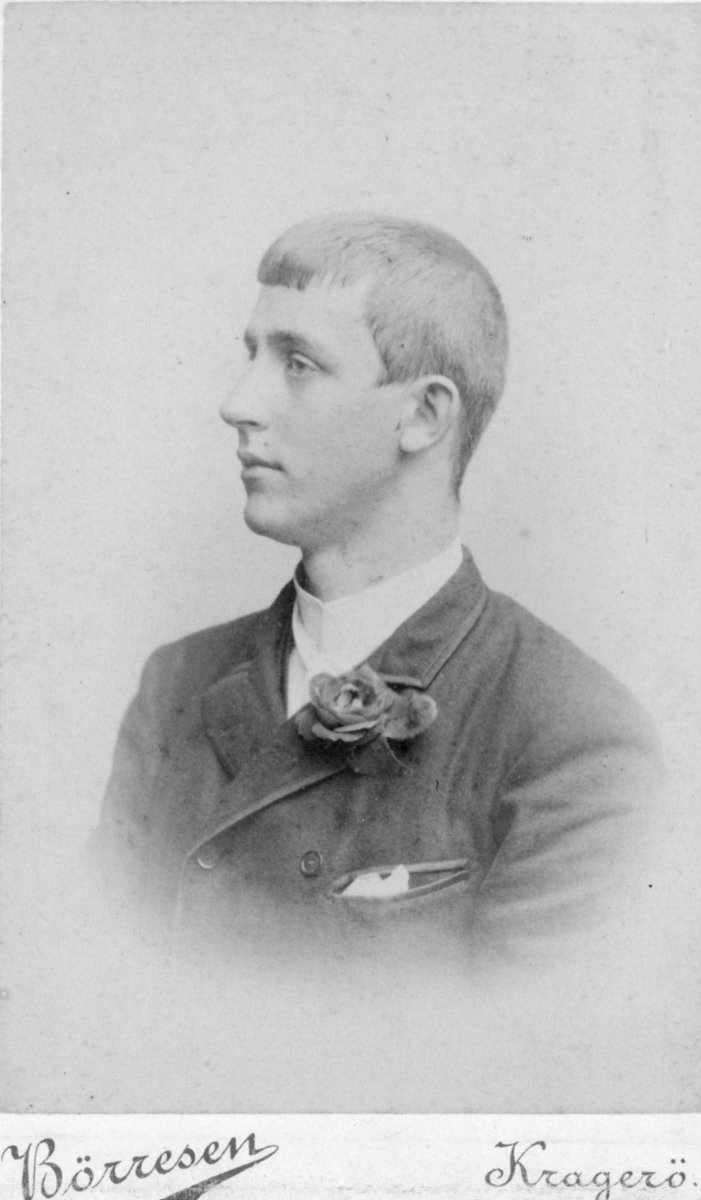
Tom Parker in 1895
The family was living on Taptonville Road at the time of the 1871 census and the household included Magna’s nephew Olaf Duus (born 1855) who was learning the cutlery trade and Alfred’s brother Stephen who was also working for the company.
After Edward died at the early age of 35, Alfred ran the business single handedly. He closed the company in 1883/4, selling the stock, finished products and equipment. By this time Alfred’s family was established in Norway. Alfred Parker died in July 1895 at Krageroe in Norway. His estate was valued at £34.8K (£4M at 2025 value)
Thomas makes his mark
Thomas was 26 years old when his father died 1895. He inherited £24K so was suddenly a wealthy man. Most of what follows comes from an article in the Norwegian newspaper Rjukan Arbeiderblad.[1] It is mainly about a Mandheimen, roughly translated as ‘man house’, in Rjukan but also has biographical notes relating to Thomas. The article has been translated using Google Translate so some phrases retain their idiomatic Norwegian in the English version.
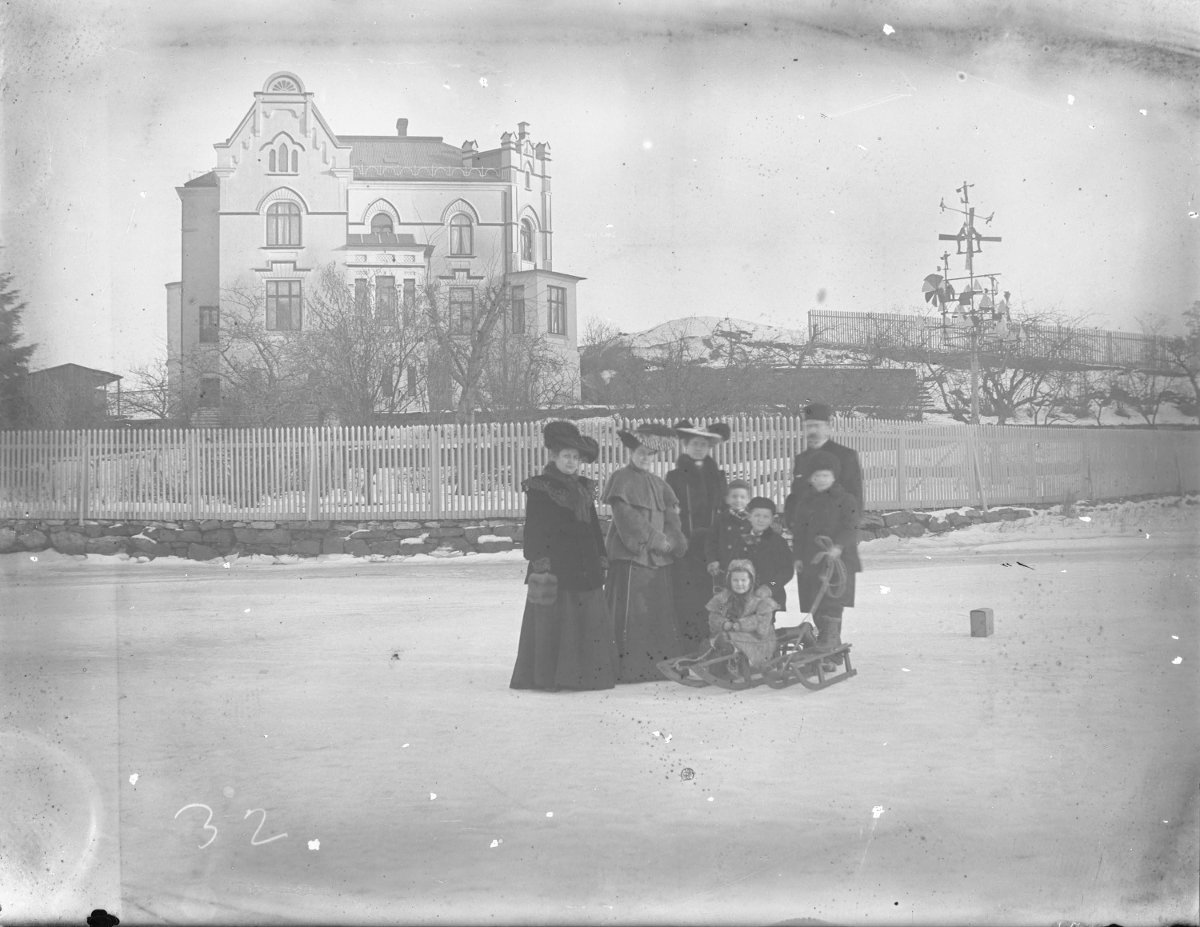
Tom Parker’s house, Marienlyst, in1899
With his inheritance, Tom – as the paper named him – had Kragerø’s “most magnificent mansion” built. His business interests included shipping and property, along with Kragerø’s Central Hotel. He was a board member of the Kreditbank based in Krageroe. His wealth brought status in the community; he was appointed British vice-consul in the coastal town in 1897. His social contacts were cultural – when a local artist sketched him walking with his daughter, Winifred, he included Edvard Munch in the picture.
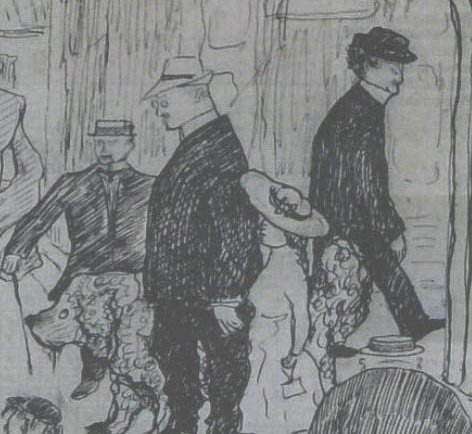
Drawing by Guido Schjølberg 1911. Berg Kragerø Museum
The reference to Kragerø being a coastal town where Tom had spent part of his childhood and his father had died may suggest that this was where the English company had commercial dealings in Norway.
Bankruptcy
The newspaper says that ‘In 1914, however, everything had gone bankrupt’. By now Tom was 45. He took a job in the payroll department of Norsk Hydro’s saltpetre factory at Rjukan and a year later was appointed as the manager of the Mandheimen.
When he moved to Rjukan, the house he had had built in Kragerø became a hospital.
A New Start
The newspaper reported that “Tom Parker – a former consul from the social elite in Kragerø[2] – was the first manager of the Mandheimen and included boxing and wrestling on the menu. In 1927 he became an English teacher for 40 students ready for Canada at Rjukan – Norway’s first and only emigrant school.”
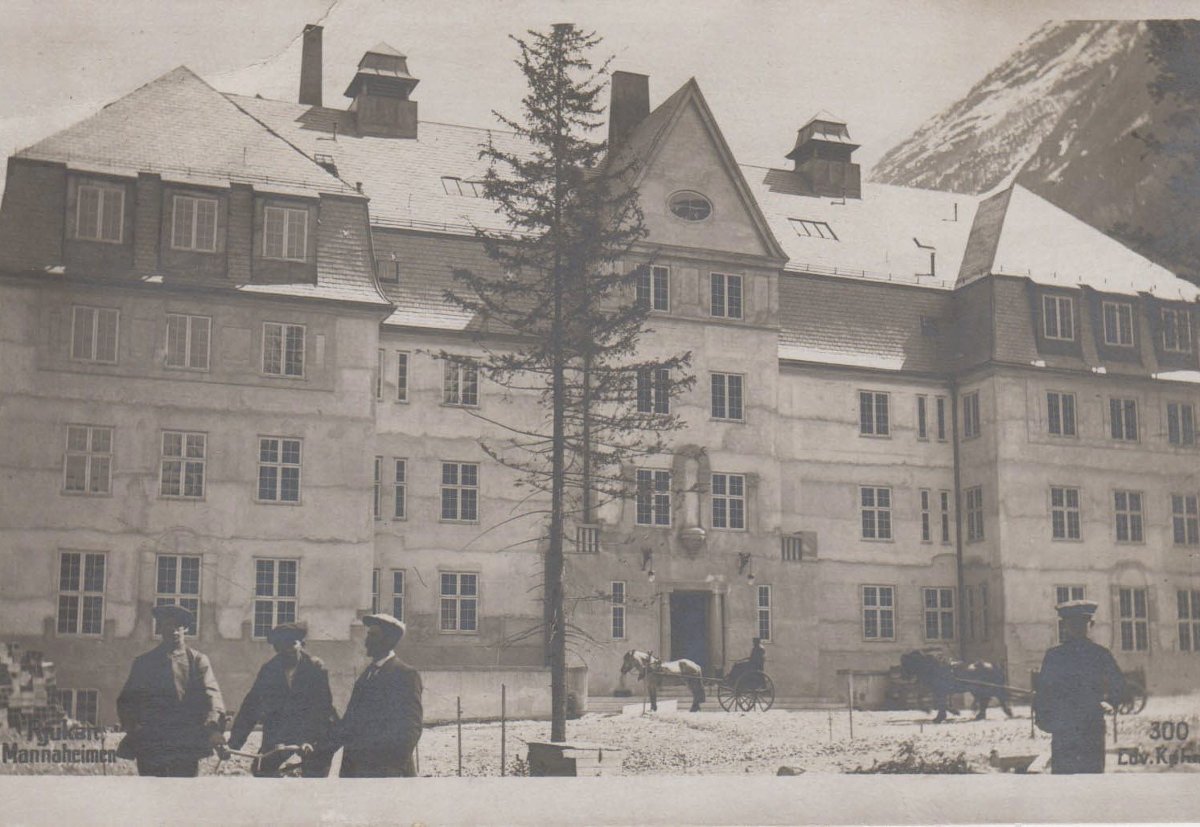
The Mandheimen
Tom’s experience of working in the Central Hotel at Kragerø was reflected in the level of comfort in the Mandheimen; not many hostels for young single men would have placed tablecloths and flowers on the tables in the refectory. Leisure activities were provided: an orchestra composed of residents gave concerts and manly sports of wrestling and boxing included many compeitions.
Rarely in historical accounts does a person’s personality emerge but in the newspaper’s account there is a glimpse of Tom’s character. Two residents were given three packed lunches to take on a walk up a local mountain. They were told that they could consume the food in two of the packages but they should only open the third at the summit. When the reached the summit they found the third packaged contained a stone – was Tom responsible for this practical joke?
Back to the Office
Tom resigned his role in the Mandheimen, returning to the payroll department in 1919. But as the article reported that in 1921,“businessman Parker – who had always enjoyed engaging in many and varied activities – could be seen as the Rjukan Dagblad’s holiday editor in the summer of 1921.” And he advertised:
English course for ladies. If a sufficient number of ladies register, the undersigned, as requested, will start a 4-month course in English for beginners. Price NOK 50 for 2 hours of instruction per week in the evening. You are bound to the entire course. Tom Parker
Other entrepreneurial activities followed. He and a partner set up a shop selling radios and later he gave English language classes at Norway’s first and only emigrant school that had been established in Rjukan. This was in 1927 when ‘emigration to Canada was a hope out of unemployment’ Many of those emigrating to Canada were from the local boxing and wrestling community which, the article claimed, ‘can be understood to the extent that Parker had exerted influence on people he knew.’
In 1927, when emigration to Canada was a hope out of unemployment, he gave English courses at Norway’s first and only emigrant school, which had been established for 40 students in Rjukan.
Retirement
When Tom Parker retired in 1934, he returned to Kragerø. He died in 1941
Tom’s Descendents
Tom and Anna were the parents of two children. Arthur who was born in 1891 did not have any children. Alfred workwd on ships which took him to many parts of the world world.
Winifred married Ole Henry and they had one son, Tom. Winifred died when Tom was young. When Tom turned 18, he changed his surname, adopting the unusual (for Norway) name of Parker. Tom Parker had a son, Tom Ole, and a daughter, Winifred. Tom Ole, in his turn, has (2025) become a father and grandfather.
The first part of the story of Ebenzer Parker is here
[1] The paper is based in Rjukan, some 200K from the Parker’s home town of Krageroe
[2] The paper was politically left wing so there are a few snide comments such as this one