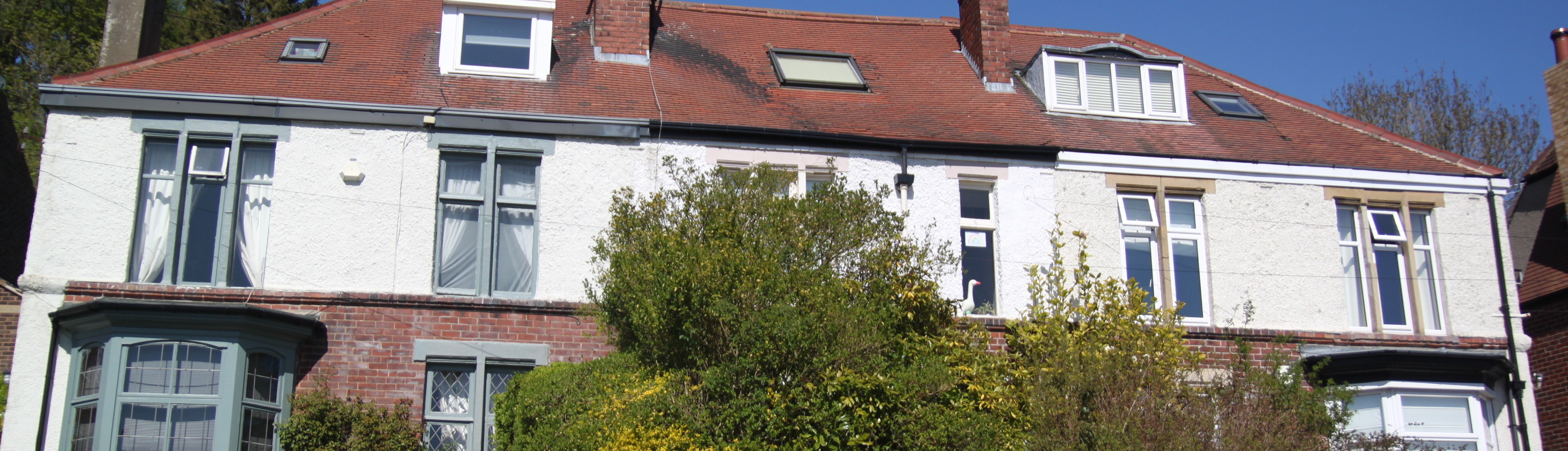
Just before Christmas 2025, there was a message on Fulwood Forum, a Facebook page. The message asked for information about Ebenezer Parker, a sometime resident of Fulwood. A little bit of research – often referred to as investigating a Rabbit Hole or more correctly a warren in this case – produced an interesting profile of Ebenezer.
The story of the Parker Family is divied into three parts. Ths part covers the life of Ebenezer Parker who was born in 1790.
The second part has short biographies of Ebenezer’s children. Jump to Ebenezer’s Family
The third part describes the lives of Alfred Parker who settled in Norway. Jump to Alfred’s Family
Ebenezer Parker
Ebenezer was born in 1790 into a well-established family of cutlers. His uncle, and namesake, was listed in a street directory of 1787 as ‘a factor and manufacturer of table knives and forks, knives for the African and Quebec trades and dealer in blistered and faggot steels’[1]. The reference to African trade suggests that cutlery produced by the family was used in the slave trade.
Ebenezer took over the company founded by his grandfather about 1830. He moved the company from Little London to Rockingham Street around the time the company was renamed Ebenezer Parker and Sons because Ebenezer’s two eldest sons, Edward (1830-1865) and Alfred (1831-1895) had joined the company.
Ebenezer’s Family
Ebenezer married Mary Booker of Dronfield in August 1828 at Chesterfield Parish Church; Mary was only 16 years old at the time. Their first child was born in November of the same year and baptised in May of the following year at Chesterfield. Mary and Ebenezer would go on to have 15 children over 25 years,
Edward, the second child was born in April 1830 and baptised at the Nether Chapel on Norfolk Street a month later in 1841 The next three children were also baptised at the Nether Chapel. After 1837, the register was sent to the Registrar General’s office and later baptisms have not been made available on-line. It is entirely possible that the younger children were also baptised at the Chapel.
Mary, along with four of the children, was in Little Sheffield according to the census of 1841.[2] Edward was boarding at a school on Ecclesall Road. Ebenezer has not been located on the census but as we shall see, he had business connections with Scandinavia so might have been out of the country. By 1851 Ebenezer and Mary were living on Clarkson Street near the present day Children’s Hospital.
Times were good for Ebenezer and his family and in the summer of 1852 they moved into Storth House in Fulwood[3]. Storth House was a substantial residence in its own grounds with fine views over the Porter Valley. It was approached by a carriage way off Fulwood Road opposite the Church. The Ordnance Survey map of 1890 shows the house whereas the house is not shown on the previous map published in 1855. So it is probable that the original Storth House was built for Ebenezer and his family, indeed in later years, it would be advertised for sale as belonging to the family.
Ebenezer died in 1862. He is buried in Fulwood Churchyard, along with his wife Mary and children Edward, Maria and Clara.
His estate was valued at £16,000[4]
Fulwood when the Parker family lived there
When the Parker family moved to Fulwood, they were exchanging life on the edge of a town that was booming as the pre-eminent town for cutlery (a term that includes tools as well as cutlery for the dining table) to a rural setting. Storth House was one of only three substantial residences set in their own grounds. The others were Stumperlowe Hall, newly occupied by Henry Isaac Dixon whose family owned James Dixon of Cornish works in Kelham Island and Stumperlowe Grange, the home of William Laycock who had a successful business manufacturing horsehair seating for railway carriages. Apart from a few cottages on Brookhouse Hill and the Hammer and Pincers public house, there were few dwellings in the vicinity of the Church. There were farms on the higher ground towards the Redmires Reservoirs and Ringinglow.
Fulwood was home to trades such as file cutting and grinding, though it is not clear where the men worked. There was a forge at the bottom of Brook House Hill and Shepherd Wheel was further down the valley. There were a few quarries such as Barncliffe Quarry at Hallam Head.
Fulwood Church, built in 1838 with funds supplied by Phoebe Silcock of Whiteley Wood Hall, was just 15 years old. As yet, the Graveyard was limited to land on the south and east, the area to the west was not developed until 1880.
The way from Sheffield to Fulwood was via Broomhill and Ranmoor. Just after the Highland Laddie (now the Bulls Head) at Ranmoor, the lane took a left to descend Jenkin Hill (now Hangingwater Road) before rising again toward Nethergreen and the Rising Sun public house. There was a cluster of cottages at the bottom of Tom Lane but essentially the lane passed between fields until reaching the Vicarage.
Around the time the Parker Family was moving in to Storth House, a horse omnibus service was inaugurated from Ranmoor to the town but this only ran twice a day in each direction. It is likely that Ebenezer had the use of either a horse or carriage but other inhabitants would use “Shank’s pony”.
The Business under Ebenezer and beyond
The business prospered. Ebenezer was always described a Merchant. There was a strong connection with Scandinavia – in 1836, Ebenezer ‘begged leave to offer for sale Nickel [sic] of the best quality. This metal is likely to have come from abroad as Ebenezer had ‘just received a fresh importation’[5]. A few years later he announced that he had a constant supply of Foreign Iron.
When an advert appeared in the Sheffield Independent in 1846 offering ‘Capital and Extensive Premises’ called Ecclesall Works, Ebenezer saw an opportunity to move the business into a more central location. From these works, the company produced saws and files and may have manufactured other tools. The company also produced cutlery.
After Ebenezer’s death in 1862, the firm was managed by Edward and Arthur until Edward’s death in 1865 and then by Arthur alone. An idea of the range of the company can be gained from Alfred’s 1881 census entry which recorded that he was a ‘Scandinavian merchant & manufacturer of edge tools, knifes and cutlery, employing 50 men
In 1883, Alfred retired and the premises were advertised for sale or to let. The stock and tools. William Bush, an auctioneer, announced the sale by auction in nearly 1000 lots covering the finished goods. As the sale took just three days, the auction of each lot must have been very short.
Atkinson Bros acquired the trade mark as ‘a very prized and valuable asset’ Atkinsons was owned by Edward Atkinson, who had trained as a cutlery clerk at E. Parker & Sons, and his brother John. In a company prospectus, published in 1897, the directors of Atkinson Bros stated that ‘Ebenezer Parker and Sons had been ‘carried on with great and unvarying success, two, at least of the proprietors having made large fortunes’.
Storth House
The house that Ebenezer had had built in the 1850 remained the family home for the rest of the decade. Two of Ebenezer’s children died in the house: Maria in 1864 and Edward in 1865.
By 1871, the Parkers had moved out, and the house and grounds, about 13 acres were leased to Daniel Coupe. Coupe was a native of Woolwich and having arrived in Sheffield became firmly established in the economic and civic life of the Town
In 1877 Alfred, by now the only director of the company tried to sell the house and the Ecclesall Works on Rockingham Street but without success. In 1881 Daniel Coupe and his family removed to a villa on Ranmoor Road and Alfred took the opportunity to upgrade the house. The house had “been put into thorough repair” stated the advert for the house placed in the Daily Telegraph in August 1882 The 13 acres of land had been divided up into plots and the house and garden now only extended to just over one acre. But when the house came up for auction, there was no interest shown.
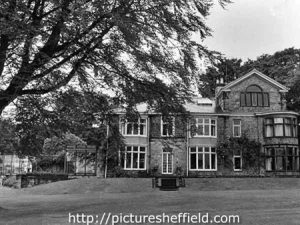
Storth House just before demolition
At the turn of the century, George and Harriet Heasledean and their daughter were the occupants. George was an assistant clerk to magistrates – an indication of how the population and character of Fulwood was changing.
Frank Gutherie Norton was the owner of Storth House from 1909, living there until well after WW2.
By the mid-1970s, Storth House had been demolished, replaced by a series of blocks of flats known as Storth Park.
Ebenezer’s Family after 1862
Mary lived until 1892. She moved from Storth house and at the time of the 1881 census was living with Henrietta, her youngest daughter, in Whiteley Wood Cottage on the Whitley Wood Hall estate. Ten years later, she was living on Ashgate Road. On both censuses, the enumerator recorded that Alfred was the was Head but by 1881, he had settled in Norway. It was perhaps coincidence that he was staying with his mother on both occasions.
Ebenezer and Mary had a very large family, even by the standards of the time. Amazingly only two, Mary and Clara, died in infancy. I have been able to trace some of these people once they became adults. There is list of the children with brief biographical details here
Bibliography
https://hawleysheffieldknives.com/n-fulldetails.php?val=p&kel=1503
Geoffrey Tweedale – Tweedale’s Directory of Sheffield Cutlery Manufacturers 1740-2013 [2nd edition]
References
[1] Historical Metallurgy 42(2) 2008 148–156 (www.hmsjournal.org)
[2] Other addresses recorded on adjacent pages of the 1841 Census, such as Club Garden indicate that this was an area between London Road and Cemetery indicate.
[3] From White’s Directory of Sheffield, published in 1852: Parker Ebenezer & Sons, merchants and tableknife mnfrs. Ecclesall Works, 245 Rockingham street ; house: Storth, Fulwood
[4] Equivalent to £1.7M in 2025 using the Bank of England’s online calculator found at https://www.bankofengland.co.uk/monetary-policy/inflation
[5] Sheffield Independent November 1836
[6] Daily Telegraph 29 September 1862
[7] Birmingham Daily Gazette 14 February 1867